Chocolate Chip Cookie Recipe: Chewy Centers, Crisp Edges
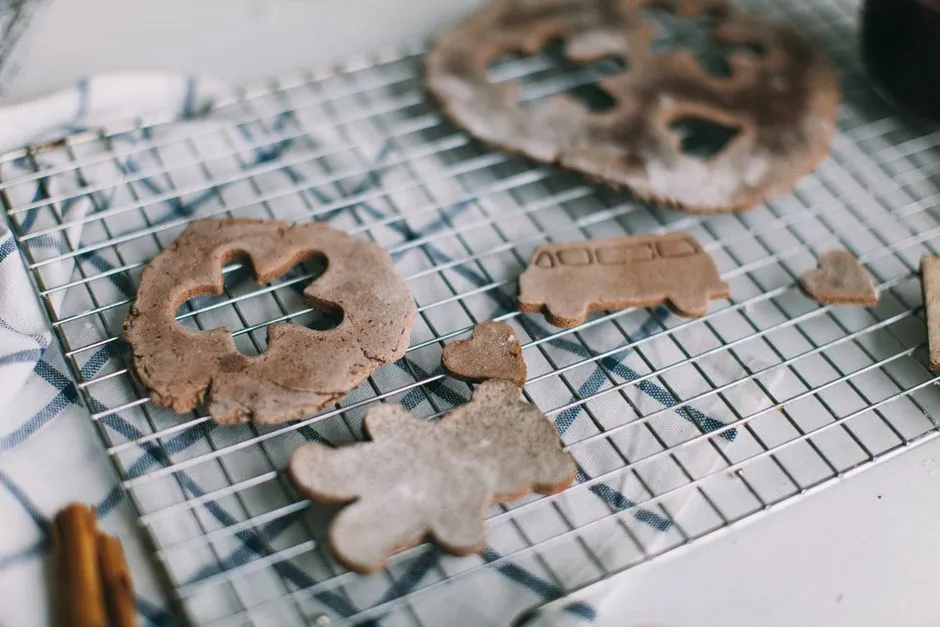
- How do you make Ambrosia chocolate chip cookies?
- Ingredients for 17 large cookies
- Step-by-step chocolate chip cookie method
- Bake one calibration cookie before the full batch
- Why this dough can bake without chilling
- Why did my chocolate chip cookies spread flat?
- How to make the cookies chewier, crisper, or thicker
- Yield and batch-size decoder
- Brown butter, salted butter, and mix-ins
- Storage, freezing, and refreshing
- Sources
How do you make Ambrosia chocolate chip cookies?
For chewy chocolate chip cookies with crisp edges, whisk 170 g melted butter with 200 g light brown sugar and 100 g granulated sugar. Add one large egg, one yolk, and 2 teaspoons vanilla, then fold in 250 g all-purpose flour, 1 teaspoon baking soda, 3/4 teaspoon fine salt, and 250 g chocolate. Scoop 60 g portions and bake at 350°F (175°C) for 11 to 13 minutes.
Pull the cookies when the edges are golden and the centers still look slightly underdone. Leave them on the hot pan for 10 minutes before moving them to a rack. The formula makes about 17 large cookies, needs no mixer, and can be baked without chilling.
Ingredients for 17 large cookies
The gram amounts control this recipe. Volume measures are approximate because flour and brown sugar can settle differently from one kitchen to another.
| Ingredient | Weight | Approximate volume | Function in this formula |
|---|---|---|---|
| All-purpose flour | 250 g | about 2 cups plus 1 tablespoon | Gives the melted-butter dough enough structure |
| Baking soda | 6 g | 1 teaspoon | Supports spread, browning, and lift |
| Fine salt | about 4 g | 3/4 teaspoon | Balances the sugar and chocolate |
| Unsalted butter, melted | 170 g | 12 tablespoons or 1 1/2 sticks | Produces a dense, chewy base without creaming |
| Light brown sugar, packed | 200 g | about 1 cup | Adds moisture and caramel flavor |
| Granulated sugar | 100 g | 1/2 cup | Supports spread and crisp edges |
| Large egg | 1 | 1 | Adds water and structure |
| Large egg yolk | 1 | 1 | Adds fat and emulsifiers without another egg white |
| Vanilla extract | about 10 g | 2 teaspoons | Adds aroma |
| Chocolate chips or chopped chocolate | 250 g | about 1 1/2 cups | Provides the chocolate pieces |
Chips hold distinct shapes. A chopped semisweet bar around 55% to 65% cacao makes irregular pools and shards. A half-and-half mix gives both effects. Keep the total chocolate at 250 g so the dough remains cohesive.
The live recipe previously equated 250 g of flour with exactly 2 cups and described 125 g as a universal spoon-and-level cup. That standard is not universal. King Arthur Baking's current ingredient chart uses 120 g per cup of all-purpose flour and tells readers to follow the weight printed in a particular recipe. Here, 250 g is authoritative; the volume column is only a fallback.
Step-by-step chocolate chip cookie method
Total time is about 40 minutes without chilling: 5 minutes to cool the butter, roughly 10 minutes to mix and portion, 11 to 13 minutes to bake, and 10 minutes to set on the pan.
- Heat the oven to 350°F (175°C). Put racks in the upper and lower thirds. Line two baking sheets with parchment.
- Melt the butter. Use a microwave-safe bowl or a saucepan, then let the butter cool for 5 minutes. It should be warm rather than hot before the egg is added.
- Whisk in both sugars for about 30 seconds. The mixture should resemble wet sand; it will not become fluffy because the butter is melted.
- Add the egg, yolk, and vanilla. Whisk for about 45 seconds, until glossy and slightly lighter.
- Fold in the flour, baking soda, and salt. Stop when the last dry streak disappears. Continued mixing develops more gluten and can make the cookie tougher.
- Fold in the chocolate. The dough should be soft and scoopable, not pourable or stiff.
- Portion 60 g balls. This is about 3 1/2 level tablespoons or a scant 1/4 cup. Place eight on each pan with 5 cm or 2 inches between portions.
- Bake for 11 to 13 minutes. Rotate the pans halfway through. Remove them when the edges are set and golden while the centers remain puffy and slightly wet-looking.
- Cool on the pans for 10 minutes. The centers continue setting from residual heat. Move the cookies to a rack after that rest.
The target is a roughly 1/2-inch golden ring at the edge, a matte cracked surface, and a center that looks one shade underdone. If the entire top is evenly brown, the cooled center will be crisper than this recipe intends.
Use dry oven mitts and place hot pans on a stable, heat-safe surface. Let a pan cool before loading a delayed third batch.
Bake one calibration cookie before the full batch
Ovens, pans, liners, and room temperature can change spread even when the formula is identical. A single calibration cookie makes that variation visible without committing all 17 portions.
- Place one 60 g portion on the same lined pan you will use for the batch.
- Bake it at 350°F (175°C), checking at 11 minutes and removing it no later than the correct edge-and-center cue for your oven.
- Let it rest on the pan for the full 10 minutes.
- Measure the result by texture and shape, not by color alone.
| Calibration result | Change for the remaining dough |
|---|---|
| Wide, thin, or greasy | Chill the scooped portions for 20 minutes and confirm the pan is cool |
| Thick but correctly baked | Press each portion slightly flatter before baking |
| Pale and soft after the pan rest | Add 1 minute to the next tray, then reassess |
| Dry center or fully crisp cookie | Remove the next tray 1 minute earlier |
| Correct center but dark bottom | Keep the formula; change the pan position or liner and check earlier |
Change one variable at a time. Otherwise, the second tray cannot tell you what fixed the first.
Why this dough can bake without chilling
Chilling is optional for this formula, not irrelevant. Its 250 g flour to 170 g butter ratio is designed to hold a 60 g portion without an obligatory rest. Brown sugar, vanilla, and the early doneness cue carry the intended flavor and texture on the same day.
Chilling still changes the result. In a documented chocolate-chip-cookie comparison, King Arthur Baking found that refrigerated portions spread less, browned more, and developed more pronounced flavor than dough baked immediately. That test belongs to King Arthur's formula, so it does not prove an exact outcome or ideal rest for every cookie recipe.
For this recipe, cover and refrigerate scooped dough for 1 to 48 hours if you want a thicker cookie and a more developed flavor. Bake the portions cold and start checking at 12 minutes; they may need 1 to 2 minutes beyond the unchilled batch. A 24-hour comparison is the clearest way to decide which version you prefer.
Why did my chocolate chip cookies spread flat?
Several different conditions can produce the same flat cookie. Check them in this order.
| Result | Likely cause | Next-batch correction |
|---|---|---|
| Flat and greasy | Butter or pan was too warm, or flour was under-measured | Weigh 250 g flour; cool butter 5 minutes; use a cool pan |
| Flat only in a warm room | Portioned dough softened before baking | Chill the portions for 20 minutes |
| Cakey, puffy, and pale | Flour was over-measured, or a whole extra egg replaced the yolk | Weigh flour; keep the one-egg-plus-one-yolk formula |
| Dry and crumbly | Cookie baked beyond the golden-edge stage | Check at 11 minutes and remove earlier |
| Dense or tough | Flour was mixed too long or the leavener is inactive | Fold only to combine; test the baking soda |
| Correct on day one, hard on day two | Cookies were left exposed | Cool fully, then use an airtight container |
A cup dipped into a flour bag tends to pack in more flour, not less. That points toward a thick or cakey cookie rather than a flat one. Weighing the 250 g removes both over- and under-measurement from the diagnosis.
Do not replace baking soda only because an open carton has crossed an arbitrary six-month mark. If its activity is uncertain, use King Arthur's documented check: stir 1/2 teaspoon baking soda into 1 tablespoon vinegar. It should fizz immediately and vigorously; a weak reaction is the reason to replace it.
How to make the cookies chewier, crisper, or thicker
The written formula targets a chewy center and crisp rim. Use one controlled change for a different result.
- Chewier throughout: use 225 g brown sugar and 75 g granulated sugar, then check the cookies 1 minute earlier.
- Crisper throughout: flatten each portion slightly and bake toward 13 minutes, watching the edges.
- Thicker: chill the scooped dough for at least 2 hours and bake it cold.
- Flatter with lacy edges: press each ball to about 2 cm thick before baking.
Sugar type, fat state, and bake time are also useful texture levers in our fudgy brownie recipe, where the goal shifts from a chewy cookie to a dense bar.
Yield and batch-size decoder
The mixed dough weighs a little over 1 kg; small differences come from egg size, ingredient left in the bowl, and how closely each portion is scaled.
| Portion size | Approximate yield | Starting bake window |
|---|---|---|
| 60 g | about 17 large cookies | 11 to 13 minutes |
| 40 g | about 26 medium cookies | 9 to 10 minutes |
Two pans hold eight large cookies each, so the 60 g batch leaves one or two portions for a cooled pan. Do not put fresh dough on a hot sheet; it begins melting before the next bake starts.
For a half batch, the exact egg portion is about 34 g because half of one large egg plus one yolk is not one whole egg. Using one whole large egg and omitting the extra yolk is convenient, but it adds roughly 50 g of egg against only 125 g flour and gives a softer, slightly cakier cookie. For a closer match, beat the egg and yolk together, weigh 34 g, and halve every other ingredient.
A double batch scales cleanly by weight. Mix it in a bowl large enough to fold without spilling flour and chocolate, then keep the same 60 g portion size, spacing, oven temperature, and visual doneness cue. The number of trays increases; the bake time for each tray does not automatically double.
Brown butter, salted butter, and mix-ins
Brown butter: Browning removes water. Add 15 g or 1 tablespoon milk or water back to the dough and let the butter cool until warm before mixing.
Salted butter: Use it and reduce the added fine salt to 1/4 teaspoon. Salt levels differ among brands, so the flavor will be less standardized than with unsalted butter.
Nuts or other solid mix-ins: Add up to 60 g toasted chopped nuts while keeping total chocolate and other pieces at or below about 310 g. More solid material makes the dough difficult to bind and portion.
Do not conceal an allergenic ingredient in a mixed batch. Check the labels on chocolate, nuts, flavorings, and substitute products, and keep utensils separate when serving someone who has described a cross-contact requirement you cannot reliably control.
Storage, freezing, and refreshing
- Cool baked cookies completely and keep them in an airtight container at room temperature for 3 to 4 days for best texture. A piece of fresh sandwich bread in the container can help them remain soft.
- Freeze 60 g dough portions solid on a sheet, then transfer them to a freezer bag for up to 3 months of recipe-quality storage. Bake from frozen at 350°F (175°C), adding 2 to 3 minutes and using the visual doneness cue.
- Keep covered refrigerated dough at 40°F (4°C) or below and use it within this recipe's 48-hour performance window.
- Warm a day-old cookie for 4 to 5 minutes in a 300°F (150°C) oven if you want a crisper edge and softer center.
Raw flour and raw egg are the safety issue before baking. The U.S. Food and Drug Administration says not to eat or taste raw flour, dough, or batter; home heat treatment of flour may not kill all harmful bacteria. Keep flour and eggs away from ready-to-eat food, then wash hands, utensils, bowls, pans, boards, and counters with warm soapy water.
For another one-bowl chocolate bake, use our chocolate cake recipe. The cookies and bars collection keeps the same gram-first, failure-first approach.
Sources
- U.S. Food and Drug Administration, Handling Flour Safely - supports raw-flour and raw-egg handling, no-tasting, separation, refrigeration, and cleanup guidance. Accessed September 4, 2026.
- King Arthur Baking, Ingredient Weight Chart - supports weighing ingredients and its current 120 g-per-cup all-purpose-flour standard, while noting that recipe-specific weights control. Accessed September 4, 2026.
- King Arthur Baking, Chilling cookie dough - supports the source's documented changes in spread, browning, flavor, and texture during its cookie-dough comparison. Accessed September 4, 2026.
- King Arthur Baking, How to test baking soda for freshness - supports the vinegar-and-baking-soda activity check. Accessed September 4, 2026.