Classic Cheesecake Recipe: Creamy, Crack-Free (Water Bath)
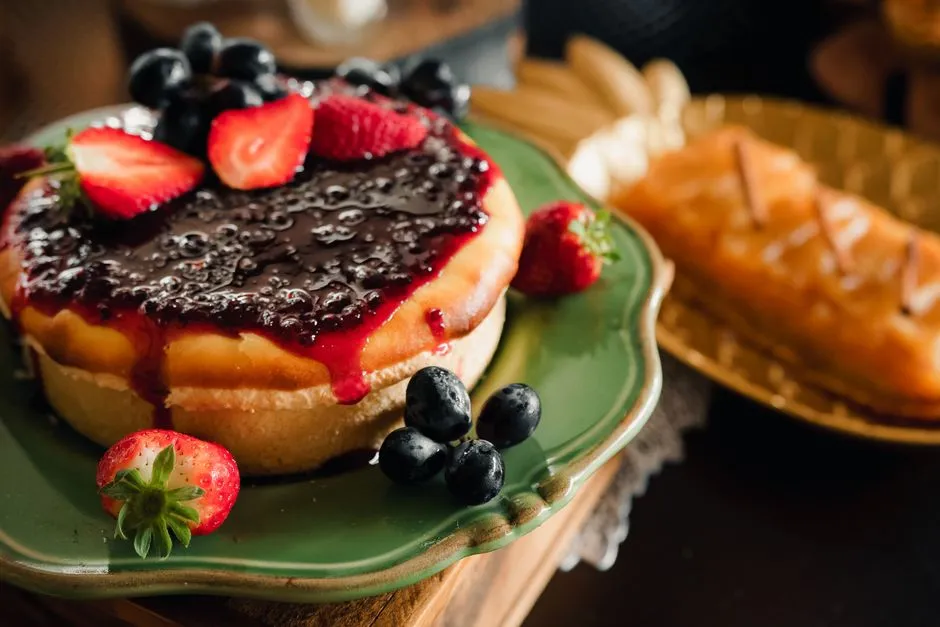
The Classic Cheesecake Recipe: Creamy, Crack-Free, Every Time
A classic cheesecake is a baked custard of cream cheese, sugar, eggs, and sour cream set gently in a graham cracker crust. This version uses 904 g (four 8-oz blocks) of cream cheese, bakes at 160°C (325°F) in a water bath for 70–85 minutes, and is done when the center reaches 63–65°C (145–150°F) and still jiggles slightly. Low, even heat is the whole secret: it is what keeps the texture creamy instead of grainy and the top smooth instead of cracked.
If you have ever pulled a cheesecake from the oven and watched a canyon open across the top as it cooled, this recipe is built for you. Every step below exists to control one variable — heat — because cheesecake is a custard first and a cake second, and custards punish rushing.
At a Glance
- Yield: one 23 cm (9-inch) cheesecake, 12 generous slices
- Active time: about 40 minutes
- Bake time: 70–85 minutes at 160°C (325°F)
- Chill time: at least 6 hours, ideally overnight
- Doneness: 63–65°C (145–150°F) at the center; edges set, center jiggly
- Key equipment: 23 cm springform pan, roasting pan for the water bath, instant-read thermometer
Ingredients
Gram weights are the authoritative measurements; cups are provided for convenience.
For the Graham Cracker Crust
| Ingredient | Grams | Volume |
|---|---|---|
| Graham cracker crumbs | 180 g | about 1½ cups (12 full sheets) |
| Granulated sugar | 40 g | 3 tablespoons |
| Unsalted butter, melted | 85 g | 6 tablespoons |
| Fine salt | 1 g | ¼ teaspoon |
For the Cheesecake Filling
| Ingredient | Grams | Volume |
|---|---|---|
| Full-fat brick cream cheese, room temperature | 904 g | four 8-oz blocks |
| Granulated sugar | 250 g | 1¼ cups |
| Cornstarch | 16 g | 2 tablespoons |
| Fine salt | 3 g | ½ teaspoon |
| Full-fat sour cream, room temperature | 240 g | 1 cup |
| Vanilla extract | 10 ml | 2 teaspoons |
| Large eggs, room temperature | 4 | about 200 g out of shell |
Two non-negotiables. Use brick-style cream cheese, not the spreadable tub kind — tub cream cheese contains more water and sets softer. And bring the cream cheese, sour cream, and eggs fully to room temperature (60–90 minutes on the counter). Cold cream cheese beats into lumps that never smooth out, and the temptation to over-mix your way out of them is how excess air — and later, cracks — gets into the batter.
Why Each Ingredient Is Here
- Cream cheese provides the body, tang, and fat. Four blocks is the classic full-size proportion for a 23 cm pan.
- Sugar sweetens, but it also tenderizes the egg proteins so the custard sets soft rather than rubbery.
- Eggs are the setting agent. Four whole eggs give a sliceable-but-creamy texture; more would push it toward firm and dry.
- Sour cream loosens the batter slightly and adds the lactic tang that separates cheesecake from sweetened cream cheese.
- Cornstarch is cheap insurance. It interferes with egg proteins bonding too tightly, which makes the custard more forgiving of a few extra minutes in the oven.
- Salt and vanilla do their usual quiet work: salt sharpens the tang, vanilla rounds the dairy.
Set Up the Water Bath Before You Start
A cheesecake water bath (bain-marie) is a roasting pan of hot water that surrounds the springform pan during baking. Water cannot exceed 100°C (212°F), so it moderates the oven's heat, keeps the air moist, and lets the custard climb to its setting temperature slowly and evenly. That gentle ride is why water-bath cheesecakes come out creamy edge-to-edge with no browned, puffed rim.
Waterproofing the springform is the step people skip and regret. Springform pans are not watertight. Do both of these:
- Set the springform inside a slightly larger cake pan or oven-safe pot if you have one — this is the most reliable barrier.
- If you don't, wrap the outside of the springform in two overlapping layers of heavy-duty foil, each sheet wide enough to come up the sides in one unbroken piece. Seams below the waterline leak; single-width strips of standard foil almost always seam below the waterline.
Boil a kettle of water (roughly 2 liters) just before the cheesecake goes in. You will pour it into the roasting pan at the oven door, so you never walk a sloshing pan of hot water across the kitchen.
Step-by-Step Instructions
1. Bake the crust
Heat the oven to 175°C (350°F). Stir the crumbs, sugar, and salt together, add the melted butter, and mix until the texture is like wet sand. Press firmly into the bottom of a 23 cm springform pan and about 2.5 cm (1 inch) up the sides — the flat bottom of a measuring cup makes this easy. Bake 10 minutes, then cool while you make the filling. Lower the oven to 160°C (325°F).
2. Mix the filling — low speed, minimal air
Beat the cream cheese on low speed until completely smooth, about 2 minutes, scraping the bowl twice. Whisk the sugar, cornstarch, and salt together, then beat them in on low until incorporated. Add the sour cream and vanilla; mix just until combined. Add the eggs one at a time, mixing on low only until each disappears, scraping after every addition.
Low speed matters more than most recipes admit. Whipped-in air expands in the oven and collapses as the cake cools, and that rise-and-fall is a major cause of cracks and sunken centers. The finished batter should be thick, glossy, and pourable — not fluffy.
3. Assemble and bake
Pour the filling over the cooled crust and smooth the top. Set the wrapped springform in the roasting pan, place both on the middle oven rack, and pour the hot water into the roasting pan until it comes about 2.5 cm (1 inch) up the sides of the springform.
Bake at 160°C (325°F) for 70–85 minutes. Do not open the oven for the first hour.
4. Cool slowly — this step is half the recipe
When the cheesecake is done (see the doneness section below), turn the oven off, crack the door open with a wooden spoon, and leave the cake in the fading heat for 1 hour. Then lift it from the water bath, remove the foil, and run a thin knife around the edge to free the cake from the pan wall — as the cake contracts while cooling, a stuck edge pulls the center apart, which is one of the most common crack causes.
Cool to room temperature on a rack (about 1–2 hours), then refrigerate uncovered until fully cold, at least 6 hours and preferably overnight. Cheesecake texture is built in the fridge; a cake cut at hour two will be soft and custardy at the center rather than dense and creamy.
How to Tell When Cheesecake Is Done
A cheesecake is done when the outer 5–7 cm are set, the center 7–8 cm still jiggles like set gelatin when you nudge the pan, and an instant-read thermometer inserted into the center reads 63–65°C (145–150°F). It will look underbaked; it is not. The custard continues to set as it cools and chills.
Three checks, in order of reliability:
- Thermometer (best). Insert an instant-read thermometer into the center at a shallow angle. 63–65°C (145–150°F) is the target. The small hole disappears into the texture and no one will ever find it.
- The jiggle test. Tap the pan's side. A done cheesecake moves as one unified wave with a slightly looser center. Liquid sloshing under the surface means keep baking; a completely rigid surface means it is already overbaked.
- The overbake warning signs. A puffed, domed top, browning across the surface, or cracks forming in the oven all mean the custard has gone too far. Pull it immediately — it will still taste good, and the sour cream topping below hides a lot.
Never test doneness with a toothpick as you would for a chocolate layer cake — cheesecake is a custard, and a clean toothpick here means it is overbaked, not ready.
Why Did My Cheesecake Crack?
Cheesecakes crack for one underlying reason: the custard was stressed — by heat, air, or physical tension — beyond what the egg structure could hold. Here is the diagnosis table:
| Symptom | Likely cause | Fix next time |
|---|---|---|
| Deep crack across the middle | Overbaked; center passed 68°C (155°F) | Pull at 63–65°C; trust the jiggle |
| Many fine surface cracks | Too much air beaten in | Mix on low; add eggs last, minimally |
| Crack that appeared during cooling | Cooled too fast, or edge stuck to pan | Oven-off rest; run a knife around the edge early |
| Cracked and sunken center | Big oven temperature swings | Water bath; don't open the door for the first hour |
| Wet, dense ring at the bottom edge | Water leaked into the pan | Nest in a second pan or double-wrap with wide foil |
And if it cracks anyway: spread 240 g (1 cup) of sour cream whisked with 30 g (2½ tablespoons) of sugar over the chilled cake, or top with fruit. A crack changes nothing about flavor.
Is This New York Style?
Close cousin. A New York style cheesecake is typically taller, denser, and richer — often boosted with extra egg yolks or heavy cream — and traditionally baked without a water bath, starting at a high temperature to brown the top before a long, low finish. This recipe is the classic creamy style: a touch lighter, baked entirely low and slow, with the water bath doing the crack prevention that New York bakers achieve through practice and forgiving amounts of fat. If you love a dense, bronzed slice, this recipe still gets you most of the way there — just expect a paler top and a silkier texture.
Serving, Storage, and Food Safety
Slicing: Dip a long thin knife in hot water and wipe it dry between every cut. Cold cheesecake slices cleanest straight from the fridge.
Storage: This is an egg-and-dairy custard, so treat it like one. Never leave it at room temperature longer than 2 hours. Covered in the refrigerator, it keeps 4 to 5 days. For longer storage, freeze whole or in slices, wrapped tightly, for up to 2 months; thaw overnight in the refrigerator, not on the counter.
Make-ahead: Cheesecake is genuinely better on day two, which makes it one of the best make-ahead desserts there is — bake it the day before you need it and the schedule works in your favor.
What to Bake Next
Once you have the low-and-slow custard mindset, it transfers everywhere: the same restraint that keeps this cheesecake creamy is what keeps a fudgy brownie dense instead of cakey — both desserts are ruined by the same five extra minutes. And if you want the opposite end of the spectrum, where a hot oven and a fast rise are the goal, the one-bowl chocolate cake is the natural counterpart. More gentle-heat desserts — crème brûlée and stovetop puddings among them — are coming soon to Custards & Cheesecake.